
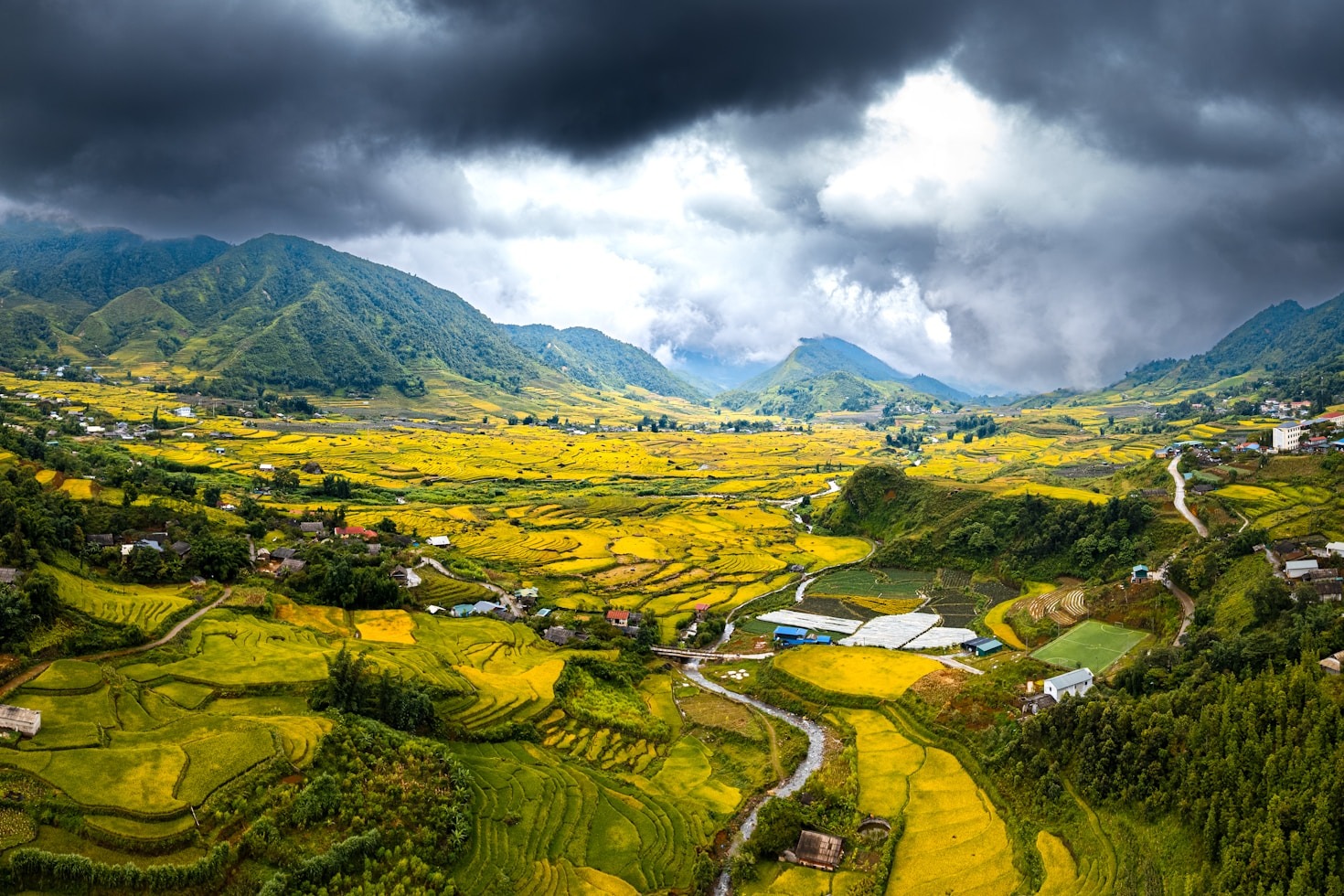
Vietnam National Parks – Vietnam offers a diverse range of landscapes, from the towering limestone karsts of Phong Nha-Ke Bang and Ha Long Bay, to the terraced rice fields of Sapa, and the dense forests of Cuc Phuong. Photography in these areas is a rewarding way to preserve memories and share the country’s unique natural heritage. Following the right techniques ensures your photos are both technically strong and respectful of the environment.
Plan Around Light and Weather
- Golden Hours: Sunrise and sunset provide warm, soft light that enhances textures and colors in mountains, rivers, and forests.
- Mist and Fog: Northern Vietnam, especially Hoang Lien Mountains, often has morning fog that adds mood and depth.
- Rainy Season: Wet conditions in tropical forests like Cat Tien can create reflections and saturated colors.
Tip: Check weather forecasts and arrive early to capture the best lighting conditions.
Composition Techniques
- Rule of Thirds: Place mountains, rivers, or trees along imaginary gridlines to create balanced shots.
- Leading Lines: Use rivers, paths, or terraced fields to guide viewers’ eyes through the scene.
- Foreground Interest: Include rocks, flowers, or foliage to add depth to wide landscape shots.
- Perspective: Try low angles for waterfalls or elevated viewpoints for panoramic vistas.
Equipment Tips
- Camera & Lens: Wide-angle lenses capture vast landscapes; telephoto lenses isolate wildlife or distant mountains.
- Tripod: Essential for long exposures, sunrise/sunset, or low-light forest photography.
- Filters: Polarizing filters reduce glare from water and enhance sky contrast; ND filters help with waterfall effects.
- Spare Batteries & Memory Cards: Remote locations often lack power or storage options.
Ethical Photography in National Parks
- Respect Nature: Do not step off marked trails or disturb wildlife.
- Leave No Trace: Carry out all trash; avoid picking plants or removing natural elements.
- Follow Park Rules: Some areas may restrict drone usage or photography near sensitive wildlife habitats.
- Support Conservation: Share photos responsibly, highlighting the beauty and importance of protected areas.
Creative Tips
- Capture Seasons: Vietnam’s landscapes change dramatically between spring, summer, and winter.
- Use Reflections: Lakes, ponds, and wet surfaces create mirror effects for dramatic photos.
- Experiment with Motion: Long exposures of waterfalls or rivers create smooth, flowing effects.
- Include Local Elements: Farmers, boats, or traditional stilt houses add context and cultural richness.
Recommended Locations for Landscape Photography
- Phong Nha-Ke Bang National Park: Limestone karsts, caves, rivers, and jungle.
- Hoang Lien Mountains: Terraced fields, misty valleys, and ethnic villages.
- Cat Tien National Park: Dense forests, rivers, and rare wildlife.
- Ba Be National Park: Lakes, waterfalls, and limestone cliffs.
Final Thoughts
Capturing Vietnam’s landscapes is about combining technical skill, patience, and respect for nature. By planning carefully, using proper techniques, and following ethical guidelines, photographers can create stunning images while helping protect the environment for future generations.
Leave a Reply