
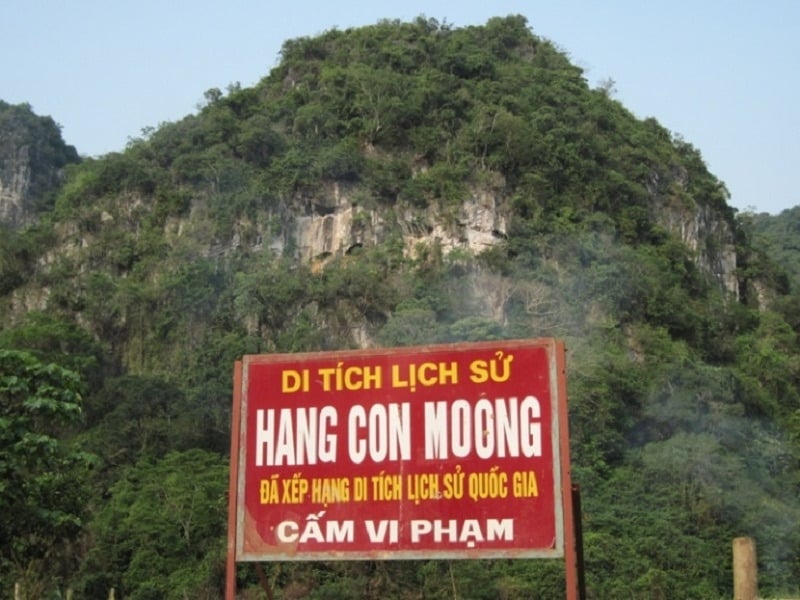
Vietnam National Parks – Con Moong Cave, locally known as “Con Moong” (meaning “animal”), is a limestone formation situated in Thành Yên Commune, Thạch Thành District, Thanh Hóa Province. The cave lies approximately 40 meters above the valley floor and has two interconnected entrances. Its strategic position within Cúc Phương National Park, Vietnam’s first national park, makes it a site of both ecological and cultural significance.
First documented in 1974, the cave became a subject of archaeological research in 1976. Over the decades, studies have revealed continuous human occupation spanning the Old Stone Age (Paleolithic) to the New Stone Age (Neolithic). Recognized as a national archaeological site, Con Moong is essential for understanding Vietnam’s prehistoric human development.
Archaeological Significance
Con Moong Cave is one of the most significant prehistoric sites in Vietnam and Southeast Asia. Excavations reveal up to ten stratified cultural layers, providing detailed evidence of human evolution and cultural transitions.

Stratified Cultural Layers
The cave preserves sequential evidence of the following prehistoric cultures:
- Sơn Vi Culture (Paleolithic):
- Characterized by basic stone tools, choppers, and flakes.
- Evidence suggests a hunter-gatherer lifestyle, relying on forest resources and riverine fauna.
- Hòa Bình Culture (Mesolithic):
- Features more refined stone tools and implements.
- Introduced techniques for fishing, mollusk collection, and forest resource management.
- Bắc Sơn Culture (Neolithic):
- Includes polished stone axes, adzes, and farming-related implements.
- Indicates early agriculture, domestication of plants, and semi-permanent settlements.
Artefacts and Subsistence Evidence
- Excavations have uncovered stone tools, axes, shell middens, and cooking residues.
- Mollusk shells, animal bones, and plant remains provide insight into diet, foraging patterns, and early agricultural practices.
- These findings document the gradual technological and cultural evolution of prehistoric communities.
Research Value
- The site allows researchers to study migration patterns, settlement strategies, and cultural development over thousands of years.
- Con Moong’s continuous stratigraphy is rare in Southeast Asia, making it a critical reference point for regional prehistory.
Ecological Features
Con Moong is embedded in Cúc Phương National Park, which spans approximately 22,408 hectares across Ninh Bình, Hòa Bình, and Thanh Hóa provinces. The park’s biodiversity contributes directly to the ecological significance of the reserve.
Flora
- Tropical lowland forests and limestone karst ecosystems dominate the landscape.
- The park features multi-layered vegetation, including giant canopy trees (up to 70 meters), epiphytes, orchids, ferns, and lianas.
- Limestone substrates support karst-specific plants, contributing to the ecological uniqueness of the region.
Fauna
- The park hosts over 300 species of birds, nearly 100 mammal species, and numerous reptiles, amphibians, fish, and invertebrates.
- Several species are rare or endangered, highlighting the importance of habitat preservation.
- Cave-adapted species, such as certain fish and amphibians, rely on karst formations like Con Moong for survival.
Integration of Archaeology and Ecology
The ecological context enhances the scientific value of Con Moong: the interplay between prehistoric human activity and the surrounding biodiversity offers insights into early resource management and environmental adaptation.
Conservation Importance
Preserving Con Moong requires a dual focus: cultural heritage and environmental protection.
Cultural Preservation
- The stratified layers and artefacts represent thousands of years of human history.
- Protecting these features ensures continuity of Vietnam’s prehistoric record for research and education.
Environmental Conservation
- Maintaining forest cover, karst habitats, and water systems supports biodiversity and protects endemic and endangered species.
- Forests surrounding Con Moong contribute to soil stability, water regulation, and habitat connectivity, which indirectly safeguard archaeological deposits.
Sustainable Management
- Controlled access ensures scientific research and public engagement do not harm the site.
- Guidelines for tourism, fieldwork, and conservation activities are essential for long-term preservation.
- Legal recognition as a national archaeological site provides regulatory authority for conservation measures.
Educational and Research Significance
Con Moong Nature Reserve serves as a model site for education and research:
- Archaeological Education:
- Detailed stratigraphy and artefacts enable study of prehistoric technology, settlement, and subsistence strategies.
- Integration with regional studies allows for comparative research across Southeast Asia.
- Ecological and Biodiversity Studies:
- The surrounding karst forest and limestone habitats provide opportunities for research on endemic species, ecological interactions, and habitat conservation.
- Students and researchers can observe how human activity and ecological systems interact over millennia.
- Interdisciplinary Research:
- Combines archaeology, anthropology, ecology, and conservation science.
- Supports programs in heritage preservation, environmental management, and sustainable tourism.
Leave a Reply