
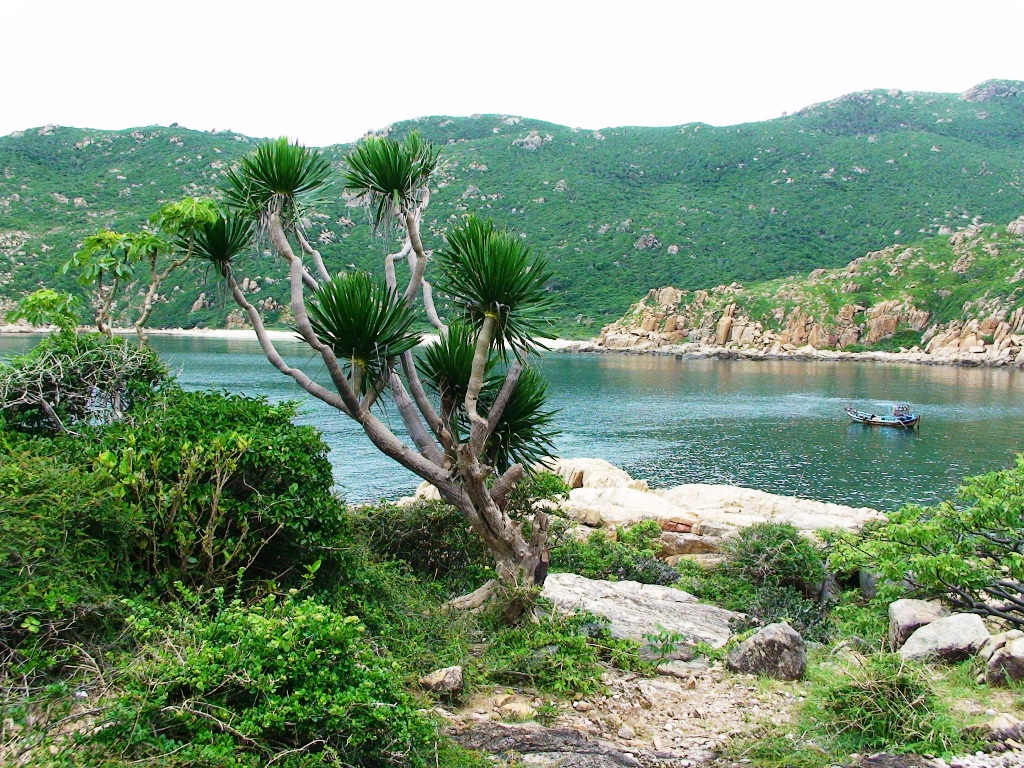
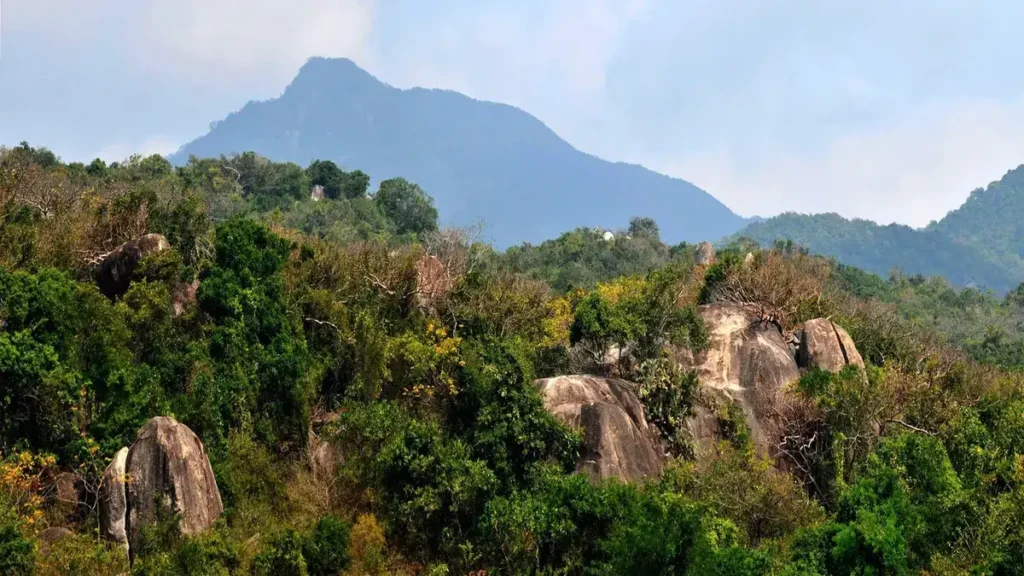
Vietnam National Parks – Nui Chua National Park is located in the south-central coastal province of Ninh Thuan, Vietnam, stretching from coastal plains to rugged mountainous terrain. The park sits between Cam Ranh Bay and Phan Rang–Tháp Chàm, forming a unique landscape where dry forests meet granite hills and the South China Sea. Its elevations range from sea level to over 1,030 meters, creating a dramatic topography of slopes, valleys, and plateaus.
The park covers roughly 24,353 hectares of terrestrial area, with an adjacent marine zone of approximately 7,352 hectares. This combination of land and sea provides diverse habitats and makes Nui Chua one of Vietnam’s most ecologically significant protected areas.
Ecosystems and Biodiversity
The park is notable for its dry tropical forests, which are rare in Vietnam and Southeast Asia. These forests are adapted to the region’s prolonged dry season, which can last over eight months. At higher elevations, patches of evergreen forest survive, creating a vertical gradient of habitats from arid lowlands to humid mountain tops.
Flora
Nui Chua hosts over 1,500 plant species, including many that are endemic to the region or listed in the national Red Data Book. These include drought-resistant trees, shrubs, and herbs that thrive in sandy soils, granite outcrops, and coastal plains. The diversity of vegetation supports the park’s wildlife and contributes to soil stability, preventing erosion in steep areas.
Fauna
The park contains a remarkable array of animal species. Surveys have recorded more than 760 species of mammals, birds, reptiles, and amphibians. Among these are endangered and vulnerable species, including the black-shanked douc langur, several deer species, and numerous reptiles adapted to dry forest conditions. Birdlife is abundant, making the park a key site for ornithologists and eco-tourists alike.
Marine Ecosystems
Nui Chua’s marine area contains over 350 coral species and a variety of reef fish. The coastline, stretching over 40 kilometers, features wild beaches, rocky shores, and coral reefs that remain relatively undisturbed. Several beaches serve as nesting grounds for sea turtles, including green and hawksbill turtles, making the park an important site for marine conservation.
Cultural and Human Context
Communities around Nui Chua include Kinh, Raglay, and Cham people. Many depend on small-scale agriculture, fishing, and traditional crafts. Cultural festivals, such as boat races and whale worship ceremonies, are still observed, reflecting the historical and spiritual connection between local people and the sea.
The park’s management emphasizes collaboration with these communities. Ecotourism and environmental education programs aim to support livelihoods while ensuring that natural resources are used sustainably. This approach aligns with the UNESCO Biosphere Reserve designation, balancing conservation with human needs.
Nui Chua National Park Visitor Activities
Visitor experiences at Nui Chua National Park are diverse and carefully designed to allow visitors to engage with its unique natural environment while ensuring ecological sustainability. The park’s combination of dry forest, mountainous terrain, and coastal ecosystems provides multiple ways to explore and appreciate biodiversity. Activities highlight both terrestrial and marine habitats, offering opportunities for education, recreation, and cultural engagement. By following responsible tourism practices, visitors can enjoy these experiences without compromising the integrity of the park’s ecosystems.
Trekking and Hiking
Trails vary from gentle coastal walks to challenging mountain routes. Hikers can observe the transition from arid scrub to dense forest and enjoy panoramic views of the coastline. Certain trails require guided tours to ensure safety and environmental compliance.
Marine Exploration
Designated snorkeling and diving areas provide access to coral reefs and marine life. Visitors can observe vibrant reef ecosystems without disturbing the habitat, thanks to carefully managed eco-tourism guidelines.
Wildlife Observation
The park’s diverse fauna offers opportunities for bird watching, reptile spotting, and monitoring endangered mammals. Guided tours help visitors understand ecological relationships and conservation challenges.
Beaches and Coastal Scenery
Hang Rai and other rocky coastlines are known for dramatic rock formations and fossilized reefs. Sunrises and sunsets here provide striking photography opportunities. Beaches hosting turtle nests offer a chance to learn about marine conservation.
Cultural Experiences
Visitors can engage with local communities to learn about traditional fishing practices, ethnic crafts, and the cultural significance of festivals. These interactions help bridge conservation awareness with cultural appreciation.
Access and Practical Information
Nui Chua National Park is located in a relatively remote region, and reaching it requires careful planning. The park’s infrastructure supports multiple modes of transport, but understanding local conditions is essential for a safe and meaningful visit. This section provides guidance on the best visiting seasons, transportation options, and essential rules to ensure both visitor safety and the protection of natural habitats.
Best Time to Visit Nui Chua National Park
The dry season, from March to September, is ideal for trekking, snorkeling, and beach activities. During this period, trails are accessible, and the sea is calm, making marine activities safer and more enjoyable.
Transportation
Phan Rang–Tháp Chàm city serves as the main entry point. From there, roads lead to park access points via private car, taxi, or motorbike. Distances range from 30 to 50 kilometers depending on the entry location.
Visitor Guidelines
- Bring adequate water, sun protection, and suitable clothing for trekking.
- Respect wildlife and refrain from touching coral or disturbing turtle nests.
- Follow designated trails and signage to minimize ecological impact.
- Employ local guides whenever possible to support community-based tourism.
Conservation Challenges
Despite protection, Nui Chua faces pressures from habitat degradation, agricultural encroachment, and climate change. Isolated dry forests are particularly vulnerable to fire and invasive species. The park’s management prioritizes habitat restoration, biodiversity monitoring, and community engagement programs.
Climate change poses additional challenges, including altered rainfall patterns and rising sea levels, which could affect both terrestrial and marine ecosystems. Sustainable tourism and community involvement are crucial to maintaining the park’s ecological integrity.
A Unique Ecosystem of Vietnam’s South-Central Coast
Nui Chua National Park is a rare blend of dry forest, mountainous terrain, and rich marine ecosystems. Its biodiversity, cultural heritage, and ecotourism potential represent a delicate balance between conservation and human use. For researchers, tourists, and conservationists, Nui Chua, located in south-central Vietnam, offers an authentic experience of Vietnam’s unique coastal and forest landscapes while highlighting the importance of protecting this fragile environment.
Leave a Reply