
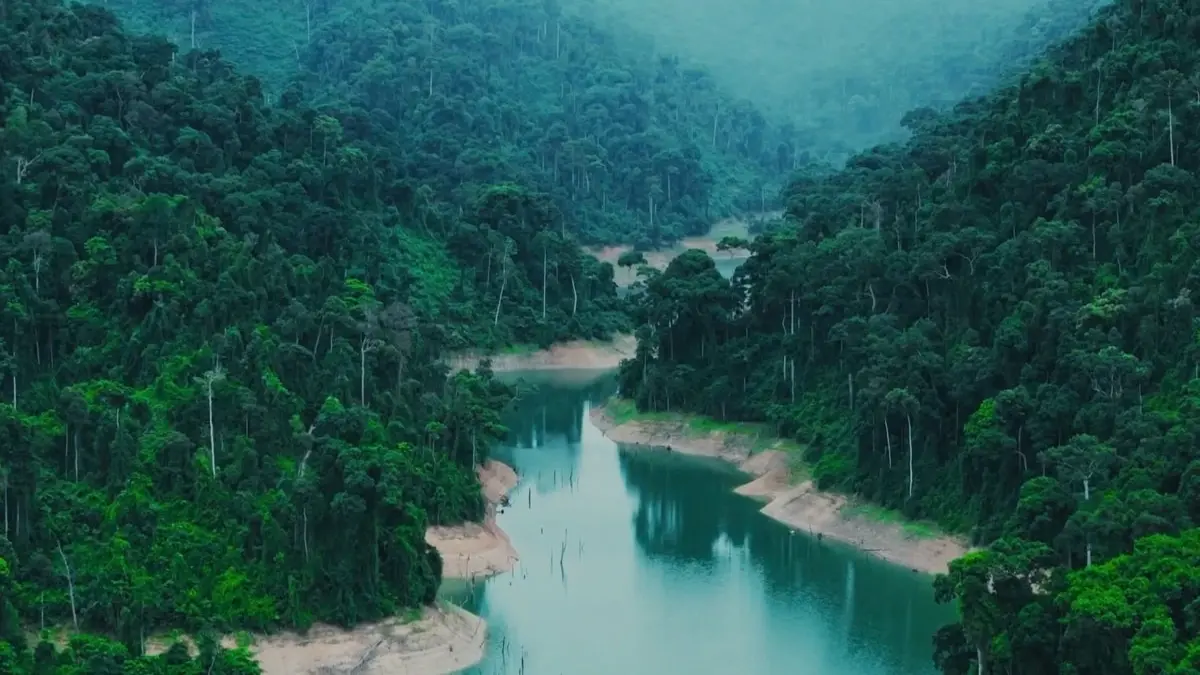
Vietnam National Parks – Song Thanh has historically been recognized as a nature reserve in Quang Nam Province, South-Central Vientam. in recent years provincial authorities have advanced steps to upgrade the area into a national park to strengthen long-term conservation and sustainable development measures. The decision reflects both the ecological importance of the landscape and the province’s intention to allocate a formal management framework and funding to protect core forests and critical habitats.
What this change means in practice
Upgrading from a reserve to a national park typically brings clearer legal protection, increased staffing and patrol capacity, and an obligation to develop management plans that balance strict protection zones with restoration and sustainable use areas. In Song Thanh’s case, local reports indicate provincial decisions and submissions to national forestry authorities as part of the process to formalize park status.
Location, landscape and physical features
Song Thanh is located in the western part of Quang Nam Province, bordering Laos and spanning parts of Nam Giang and Phuoc Son districts. The landscape is rugged and varied — from valley bottoms and river corridors to steep ridges and highland forest — and includes watersheds that feed downstream river systems. The area forms part of the Central Truong Son (Annamite) ecoregion, which is notable for its complex topography and biological connectivity across the Vietnam–Laos border.
Elevation and forest cover
Topography in the Song Thanh area is complex: reported elevation ranges show lowlands rising to high peaks, with forest cover estimated to remain high across most of the reserve. Vegetation includes tropical evergreen forest at higher elevations and seasonal/semievergreen formations in lower zones — a vertical gradient that supports distinct habitat types.
Size, Zoning and Core Conservation Values
Provincial communications concerning the upgrade reference a large conservation unit. Public reports commonly cite an area on the order of tens of thousands of hectares — with figures reported around 76,660 hectares for the reserve area and additional buffer/rehabilitation zones described during planning and conversion discussions. These area figures underpin the reserve’s role as one of the larger protected forest blocks in Central Vietnam.

Zonation approach described in planning
Documents and media coverage indicate a zonation concept: strict protection cores (primary forest), ecological restoration zones (for degraded areas), and buffer/transition zones where limited sustainable use or restoration projects may occur. This zonation supports both biodiversity protection and phased socio-economic development for adjacent communities.
Biodiversity highlights and scientific importance
Song Thanh supports substantial biological diversity. Published summaries and provincial inventories list several hundred species of plants and animals across taxa; compiled figures mentioned in provincial reporting include over 830 higher plants (with a number of endemics) and a broad vertebrate fauna including dozens of mammal and bird species. These data emphasize Song Thanh’s role as a reservoir of regionally important biodiversity, including primate species of conservation concern.
Key species and conservation interest
Among the species of note reported in the region are douc langurs (representatives of Pygathrix spp.), which are conservation priorities across the Central Annamite landscapes. Field surveys and species accounts (including regional gibbon and primate assessments) have identified Song Thanh as an important site for forest primates and other forest mammals; the area is also a Key Biodiversity Area for certain taxa. Continued surveys are important to refine population estimates and ranges for threatened species.
Human communities and socio-economic context
Communities in Nam Giang and Phuoc Son districts are culturally diverse and often depend on forest and agro-forest livelihoods. Traditional practices, smallholder agriculture, and extraction of forest products historically shaped local economies. Provincial plans for Song Thanh’s upgrade have emphasized co-management approaches that aim to integrate community development, sustainable livelihoods, and conservation outcomes — for example through ecotourism potential, restoration employment, and participatory forest protection.
Community-based conservation initiatives
Reports reference community engagement in forest protection patrols, replanting or restoration projects, and small-scale ecotourism pilots. These activities are core to any long-term strategy that balances the needs of people with strict conservation objectives for primary forest and key species habitats.
Threats, pressures and management priorities
Song Thanh faces the same kinds of pressures common to remote forest landscapes in Vietnam: illegal logging, hunting/poaching, land-use change at forest margins, and impacts from past extraction activities. Additionally, hydrological changes from upstream reservoir development and climate variability pose risks to intact habitat and downstream communities. Provincial authorities have explicitly cited the need to tackle illegal exploitation and to restore degraded areas as part of the park conversion rationale.
Management priorities moving forward
Key priorities described in planning and news coverage include: (1) strengthening legal protection and patrol enforcement within core forest areas; (2) restoring degraded zones; (3) developing biodiversity monitoring programs and scientific surveys; and (4) establishing community livelihood alternatives and regulated ecotourism that support conservation funding. These measures align with best practices for converting reserves into functional national parks.
Research, monitoring and conservation opportunities
Song Thanh’s size, location in the Annamite landscape, and reported species lists make it a high-priority area for continued scientific work. Needs include refined habitat mapping and GIS-based boundary delineation, systematic biodiversity inventories (plants, mammals, birds, amphibians, reptiles, freshwater fish and invertebrates), and long-term monitoring to assess trends and threats. International and national research collaborations (universities, CIFOR/ICRAF, conservation NGOs) could accelerate data collection and evidence-based management.
Visiting Song Thanh: access and practical information
Access to Song Thanh typically requires travel through Quang Nam’s western districts (Nam Giang and Phuoc Son). The area is remote and often reached via provincial roads and forest tracks; logistics and permissions should be checked with provincial authorities and park management offices where applicable. Because of its conservation focus and sensitive habitats, many zones (especially strict protection areas) are not suitable for casual tourism; visits should be arranged through authorized guides and local management to minimize disturbance.
Practical tips for responsible visits
If travel is permitted to certain zones: plan with local authorities, use certified guides, avoid entering core protection zones without permission, follow leave-no-trace principles, and prioritize community-run services to support local benefits from conservation. Researchers should secure permits and collaborate with provincial conservation agencies for survey work.
Song Thanh represents a significant protected landscape in central Vietnam that warrants sustained protection and scientific investment
Song Thanh’s transition from a nature reserve toward national park status reflects both its ecological value and the urgent need for stronger protection, restoration, and community-integrated management. Continued investment in survey work, enforcement, and livelihood programs will be essential to secure the reserve’s biodiversity and to realize its potential as a model for landscape conservation in the Annamite region.
Leave a Reply